Macmillan Dictionary - Word of the Day

Showing posts with label 11th form. Show all posts

Tuesday, May 1, 2012

The World of Work


We have been dealing with the topic THE WORLD OF WORK.

Initially, we talked about THE NEW WORLD OF WORK. We compared today's world of work with the past one. We did many exercises in class and we read some texts, for example: “Staying-at- home mums fit the bill”, “Multi- Tasking Madness”, etc. We also did vocabulary exercises and revised the grammar topic, relative clauses. As for videos we watched the music video “Under Pressure” by Queen and David Bowie.


Then we started talking about WORKING STUDENTS. This week, we have been talking about students who have a part-time job, students who work in their holidays, do volunteer work or try a gap year. Many students have never heard of the term "GAP YEAR" since this is something we do not try in Portugal; consequently we will read and listen more about it.

Saturday, March 3, 2012

Multiculturalism


In class we have been talking about the topic multiculturalism. Below you have some questions I asked and some answers I got from my students.

Multicultural societies
Definition of multiculturalism (among many definitions) : The doctrine that several different cultures (rather than one national culture) can coexist peacefully and equitably in a single country.


1.Can you name some of the most multicultural countries in the world?
Australia, the USA, Canada,  Argentina,  the UK, France, Luxembourg,  Switzerland, etc.


2. Why do people emigrate?
People emigrate to escape from:  unemployment, poverty, hunger, war, religious and political persecutions, natural disasters, drought, etc.
They are looking for:   better working and living conditions; better wages; a better education; political or religious freedom, family reunification, etc.


3. What sort of difficulties do these people face?
Discrimination, loneliness and distance from family and friends, difficulties in adapting to: a new language, new customs, rules, weather;  etc.


4.Should these people adopt the customs of the new country or should they keep their own traditions?
They can adapt to the customs of the new country but at the same time they should keep their own traditions.


5.  Let’s consider now the second and third generations. How different are they from their predecessors?
They are much more integrated in the new society but they often continue to be in contact with the culture of their parents/grandparents.

Reading comprehension exercises: “The British speak out – yes or no to multiculturalism”.
After reading
1.What are labels ? They’re sterotypes.  

   Stereotypes are standardized and simplified conceptions of groups based on some prior assumptions.


2.What does this mean?    Labels are for cans not people- Anthony  Rapp


    3. Why do people label each other? They want to feel superior to others. Many times this attitude hides a feeling of inferiority.

    4.  Why are people discriminated against? People are discriminated because of their: sex, age, race, colour, social status, religious or political beliefs, nationality, etc. In short, they are different from the dominant group.

    5. How does one person discriminate against another?
By excluding that person, by making fun of him/ her, by creating caricatures; by ignoring him/ her, by humiliating him/her, etc.

See the label multiculturalism (on the right) and find many more posts about this topic

Friday, January 27, 2012

Ethics in advertising


How can consumers protect themselves from misleading advertising?
Consumers should:
  • Be attentive to advertising messages;
  • Get informed before they buy;
  •  Distinguish between advertising messages/pictures and reality;
  •  Talk to their children about the tactics used by advertisers;
  •  Complain when they feel misled/ fooled/deceived;
  •   Read labels and “the small letters”;


What should authorities do?
-          Should they allow advertisers to do whatever they want?
-                                               establish laws against misleading advertising?
-                                                 ban commercials that influence people to behave in an unethical manner?
-                                               ban commercials aimed at children? 

Videos 

After watching the second video, answer these questions:

1-     What are the chronic diseases caused by fast food?

2-      Who profits from children´s obesity?

3-      How do advertisers target kids?

4-      What can society do?

A debate on consumerism


On February we are going to have a debate/ role play on consumerism.
Students are going to work in groups of four or five and are expected to perform the role of the following  characters.

Groups of four:
A shopaholic, a psychologist; an advertiser and defender of the consumer society; an activist against consumerism.

Groups of five:
A shopaholic, a psychologist; an advertiser and defender of the consumer society; an activist against consumerism; a friend or a relative of the shopaholic.

  Get prepared!

Friday, January 20, 2012

Consumerism and advertising


We have been talking about the topic, Consumerism, which is divided in 3 different sets.

In the 1st set, we discussed the following topics:
·         the impact of the media in our society;
·         the difference between reality and the pictures conveyed by the media;
·         the making of a celebrity;
·         today’s focus on popularity and success;
·         the perpetuation of the impossible “thin” and eating disorders;
·         Body idioms and expressions;
·         Grammar: Infinitives and gerund;


In the 2nd set, we talked about:
  • the impact of advertising in our society;
  • commercial and non-commercial advertising;
  • goals of advertising (AIDMA)
  • what makes a good print ad;
  •  xamples of advertising in our daily life;
  • the differences between slogans and advertising messages;
  • grammar: modals
  • grammar: IF clauses type 3
We used videos such as, Emmy 2011 best commercial nominees ; Movie segments to assess grammar goals;


In the third set, we have been talking about:
  • ·         the ethics in advertising;
  • ·         examples of unethical/misleading advertising;
  • ·         protection against misleading advertising;
  • ·         aggressive advertising techniques;
  • ·         effects of junk food advertising on childhood obesity.
We have been using videos such as, " Food ad tricks;  "Effects of junk food advertising on childhood obesity ;

Sunday, December 4, 2011

Camilo English Corner: a school project


Have a look at Camilo English Corner. We have been posting many messages recently. Have a look at these:

- Virtual friends! Good or bad?
- Looking for alternative lifestyles
- Speaking time
- Tips for learning vocabulary and grammar

Camilo English Corner makes part of Camilo Multilingue, a school project which involves some of the languages taught in our school.

Visit our different blogs. There you´ll find news written in different languages.
Portuguese 
English
Spanish
French

Wednesday, November 16, 2011

Cloning

What exactly is cloning?


Cloning is the creation of an organism that is an exact genetic copy of another. This means that every single bit of DNA is the same between the two.    Read more
Interactive explore: Try to create a clone

Sunday, October 23, 2011

Our surrounding world

Next week my students are having their first written test this year.

Contents for the test

1. Reading comprehension and text production about the topics:
Block 1: Our World
Set 1:  A endangered planet
Set 2: Saving our Earth

Learn about the environmental situation by reading the site ThinkQuest.
Practice vocabulary at Learn English Today

2. Grammar:
  Connectors, past  tenses, prepositional verbs and comparatives.

Don't forget to study.

Wednesday, October 19, 2011

11th Form: our surrounding world

Hello! I have prepared a video about our environmental situation. It was my first video, I hope you like it!

Wednesday, July 7, 2010

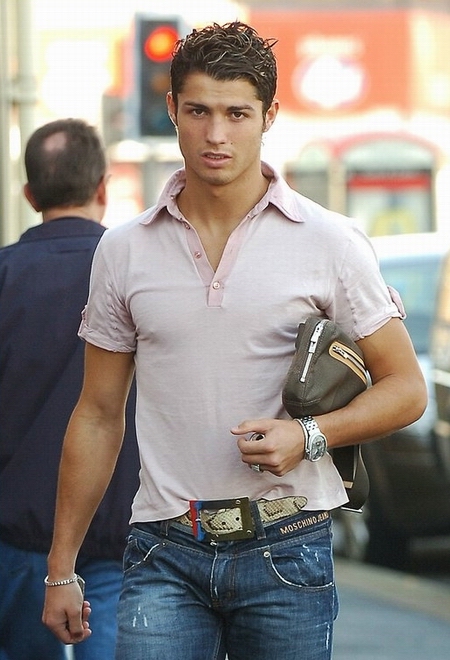
Cristiano's fatherhood: a Portuguese father and an American mother ...


Cristiano Ronaldo becomes a father – but mother keeps mum

Identity of the mother a mystery amid speculation that former Manchester United forward had arranged for a surrogate

He may have been an overpaid flop during the World Cup in South Africa but Cristiano Ronaldo is basking in the joys of fatherhood for the first time.

Portuguese media reported that Ronaldo's 9lb 8oz baby boy was born on 17 June two days after Portugal played the Ivory Coast and four days before he helped his side defeat North Korea 7-0.

But the identity of the mother was a mystery amid speculation that the former Manchester United winger had arranged for a surrogate after he said he had "exclusive guardianship" of the child.

The Portuguese newspaper, Diario de Noticias, said the baby boy was conceived last summer in San Diego, California.

Ronaldo's youngest sister, Katia Aveiro, told the newspaper that the baby boy has dark eyes and hair like his father.

"He is very happy, of course, who wouldn't be happy to have children?" Aveiro said. "The news is true but he doesn't want to talk about it. It's personal and when he wants to, he will talk." Ronaldo will make an official announcement when he had returned from Madrid, where he is dealing with professional matters, she said. She did not give the baby's name and the Real Madrid star insisted that the identify of the mother would be kept confidential.

The newspaper said Ronaldo, 25, had travelled to the Algarve immediately after his team were knocked out of the World Cup last Tuesday to be with his son.

A statement posted on Ronaldo's official Facebook page said: "It is with great joy and emotion that I inform I have recently become father to a baby boy.

"No further information will be provided on this subject."

Source: http://reidamoda.files.wordpress.com/2009/10/cristiano-ronaldo.jpg

Friday, June 4, 2010

The future ...


In our last topic: the future, we talked about students' plans and worries about the future.

Many of my students already know what degree they want to take or what they want to do for a living. However there are others who still have many doubts about what they want to do later on. But as they are going to stay another year at school (in the twelfth grade) they still have some time left to reflect upon their future ...

I have students in very different areas, such as sciences, art, literature and languages; so they are interested in being: doctors, engineers, environmentalists, biologists, architects, designers, photographers, lawyers, journalists, etc…

As for their worries about the future, they have a long list. They worry about the economic situation “the crisis”, as well as the environmental situation, about unemployment, criminality, violence, corruption, uncertainty in the world of work, etc…

Nevertheless when I ask them if they are optimistic or pessimistic about he future, they say they are still optimistic and feel that today’s situation will get better.

I am glad they are optimistic because we need people who believe and fight for a better world.

Monday, May 10, 2010

Volunteering


Doing volunteer work will give you the opportunity to do something useful and worthwhile. You will be helping others, and at the same time you will be helping yourself.

Now have a look at a text I've found on the web. If you want to listen to this text try the link below.

" Volunteering gives you an opportunity to change lives, including your own. If you're feeling frustrated or overwhelmed by the news of a disaster, volunteering to help can be a great way to cope. If you'd like to support a cause but can't afford to donate money, you can donate your time instead.

Helping others in need is such an important part of the American way of life that many high schools require their students to spend a certain number of hours volunteering in order to graduate.

So how do you go about it?

Find What's Right for You

Unlike school, with volunteering you get to pick what really interests you and who (or what) is most deserving of your time. Need some ideas to get you started? Here are just a few:

Help kids learn and grow. Become a Big Brother or Big Sister, camp counselor, or volunteer for an after-school sports program. Special Olympics games and events are great ways to get to know special-needs kids.

Give back over the holidays. Serve Thanksgiving dinner to the homeless, volunteer at your local food bank, or distribute toys to kids. Your church, temple, mosque, or other place of worship also may be able to use your help.

Play with pets at a local animal shelter. Most shelters depend on volunteers to keep the cats and dogs happy and well exercised. (And when you're walking rescued dogs, you get a workout too.)

Volunteer for a political campaign. If you're interested in politics, it's a great way to find out how things work on the inside. Even if you can't vote, you can still work to get your candidate elected — whether it's the president of the United States or your town mayor.

Help the environment. Join a conservation group and help out with river preservation. Take part in a local park cleanup day. You don't have to be an outdoorsy type — if you can't picture yourself hauling trees up a hill, you could help out in a park office or education center.

Support a health-related cause. Lots of us are close to people who have a medical problem (like cancer, HIV, or diabetes, for example). It can feel good to donate your time to an organization that raises money for research, delivers meals, or offers other help to people with an illness.

Volunteering is a great way to learn new skills — from working as part of a team to setting and reaching goals. It gives you a chance to discover what kinds of things you're best at and enjoy the most. A volunteer job that you love can even help shape your ideas about your career goals.
Volunteering also can provide you with a sense of responsibility because people really depend on you. And it can help you develop a new understanding of people who are different from you — people with disabilities, people in financial distress, sick kids, or the elderly.

Donating your time is a great way to feel like you have the power to change things for the better. When people depend on you, it can change the way you look at yourself. You can feel proud of the goals that you've achieved for an organization — whether it's helping to organize a 10K to raise money for breast cancer or running the race itself.
Volunteering is also a great way to get a perspective on your own life. Sometimes it's easy to get consumed by worries about your grades or the fight you had with your friend or parent. And although these things are very important in their own way, sometimes it can be helpful to get some distance and think about other things. Volunteering allows you to do this. It lets you focus on others and see that your involvement in the world can be meaningful.
Finally, volunteering can help save you from being bored — it gives you a place to be where you can have a good time and keep busy.
If it's a good fit — meaning you like the organization, they like you, and you like the work — volunteering can be an incredible experience."
Reviewed by: Kate M. Cronan, MD
Date reviewed: November 2009
http://kidshealth.org/teen/school_jobs/jobs/volunteering.html

Monday, May 3, 2010

Working students ... The gap year ...


Why take a gap year?

If you are considering taking a gap year you should be clear about your
reasons for making this decision.

Reasons students have for taking a gap year include:• Thinking that they can’t combine applying for jobs with getting a good
degree
• Wanting to travel and experience living & working in another country
• Knowing what they want to do next, but wanting a break
• Wanting to gain further skills to enhance employment prospects
• Needing to gain relevant experience necessary for being accepted for
postgraduate study such as social work, librarianship, museum and
archive courses.

Advantages
• It can give you time to clarify your ideas and plan for the future
• You may be able to earn money to fund future plans e.g. further study
• Relevant work experience can help you get into competitive careers
e.g. broadcasting
• A gap year may heighten your enthusiasm for further study and work
• You may gain new, or develop existing skills valued by employers e.g.
team working, organisational, problem-solving
• You will meet new people, learn more about yourself and benefit from
increased confidence.
• It can help you to ‘build’ your CV

Disadvantages
• You may find it hard to get back into the routine of work and study
• You may end your year in debt rather than profit
• You may find it difficult to apply for jobs whilst abroad, or be unable to
attend interviews if you are working - you must plan ahead
• You may be a year behind your contemporaries in terms of salary and
promotion prospects
• Not every employer will see the benefit of a gap year – you will need to
convince them

Source: http://www.careers.dur.ac.uk/info/leaflets/2004/gap_year.pdf

The changing world of work ...


Changes in the world of work

A. Fill in the gaps with the correct words (below).

1. Time ……………………………….;
2. …………………………… flexibility;
3. Need for ……………………………. qualifications;
4. Use of ………………………………… and sophisticated technology;
5. Greater …………………………… of jobs;
6. Working ………………………..;
7. Technostress and multitasking …………………………….;
8. ………………………….. of unemployment;
9. No lifetime …………………………..;
10. ……………………………. work;
11. Need for ……………………… regulations;

Variety, higher, madness, career, safety, abroad, fear, flexibility, temporary, complex, geographical

Changes in the nature of work

B. Match together!

unpredictable, challenging, changing, risky, uncertain, demanding, skillful, temporary, creative, innovative, cooperative, stressful, competitive

Which adjectives have a positive connotation?


Which adjectives have a negative connotation?

Monday, April 26, 2010

Under Pressure


Before we read the text named Multi-Tasking Madness, we listened to the song: Under Pressure by the Queen. This activity was intended to act as a motivation.

The students listened to the song and filled in the gaps with the correct word.

Under Pressure - Queen

Mm ba ba de
Um bum ba de
Um bu bu bum da de
Pressure …………………………………….down on me
Pressing down on you no man ask for
Under pressure - that burns a ……………………… down
Splits a family …………………………………….
Puts people on streets
Um ba ba be
Um ba ba be
De day da
Ee day da - that's o.k.
It's the terror of …………………………………..
What this world is about
Watching some good friends
Screaming …………………………………………
Pray tomorrow - gets me ………………………….
Pressure on people - people on streets
Day day de mm hm
Da da da ba ba
O.k.
Chippin' around - kick my …………….. around the floor
These are the days it never ………………… but it pours
Ee do ba be
Ee da ba ba ba
Um bo bo
Be lap
People on streets - ee da de da de
People on streets - ee da de da de da de da
It's the terror of …………………………………….
What this world is about
Watching some good friends
Screaming ………………………………………………..
Pray tomorrow - gets me higher high high
Pressure on people - people on streets
Turned away from it all like a …………………………….
Sat on a fence but it …………………………………
Keep coming up with love
but it's so ………………………………….. and torn
Why - why - why ?
Love love love love love
Insanity laughs under pressure we're …………………………….
Can't we give ourselves one more chance
Why can't we give love that one ………………………………………
Why can't we give love give love give love give love
give love give love give love give love give love
'Cause love's such an ………………………………… world
And love dares you to …………………………….
The people on the ……………………………of the night
And love dares you to change our way of
Caring about ourselves
This is ………………………………………………….
This is ourselves
Under pressure
Under pressure
Pressure

Multi- tasking and technostress


We are presently reading a text whose title is: Multi-tasking madness. This problem affects many people nowadays because technology allows us to do so many things simultaneously. We can work from anywhere at any time; consequently we never feel disconnected from work. As time goes by, we will feel more and more tired and unable to enjoy life.
Be aware of technostress and multi-tasking madness!


Now Have a look at a text I 've found in the web about technostress.

A Conversation with TechnoStress Authors
Michelle M. Weil, Ph.D. and Larry D. Rosen, Ph.D.
________________________________________
Q: What is TechnoStress?
A: TechnoStress is our reaction to technology and how we are changing due to its influence. Over the past 15 years, as technology has become an increasingly prevalent part of our lives, we have watched TechnoStress develop and impact people in their personal lives, their family and their work environment. We are changing both internally and externally due to technology and these changes are not in our best interests physically, socially or emotionally.
Q: What is TechnoStress doing to us?
A: Some of the ramifications of the rapid influx of technology in our world are blatant, while others are quite subtle. Today, people diminish their own intelligence in comparison to technology, feeling less able and less capable in comparison to "the machine." Because technology lets us do so much, today we take on too much and end up feeling overwhelmed and never "finished." We feel invaded by technology on all fronts, by the beeps of our pagers, cell phones, incoming faxes and those of others around us. We tote our laptops on vacation and our bosses expect us to carry sky pagers. Our personal and work boundaries are blurred and we never feel true "down time" any more.
Q: What are the symptoms of TechnoStress?
A: There are many signs of TechnoStress. For example, technology allows us to do many things simultaneously. If we work at home, we can cook our dinner in the microwave oven, talk on our cellular phone, send e-mail, do a load of laundry, and be printing a document all at the same time. However, even though technology enables us to do many things at the same time, our brains become overloaded. We call this "Multitasking Madness" and we are seeing more and more of it every day. We have fallen into the trap of, "Because we can, we do." We can find ourselves unable to think clearly and we become forgetful and incapable of having a restful sleep as the stimulation from the overload keeps our brain working overtime.

Wednesday, April 14, 2010

Vocabulary related to the world of work


Hello!

I have found a site where you can test some vocabulary related to the world of work.

Try it the following! If you have many difficulties, then you can see the worksheet with the Portuguese translation

Worksheet: The world of work-vocabulary

The world of work - vocabulary (with Portuguese translation)

Tuesday, April 13, 2010

Telework: pros and cons...


Today's technologies allow people to work whenever and wherever they feel like it. Work has become more flexible and accessible. However, telework also has disadvantages. Workers need to manage their time very well, and learn to separate their personal life from professional life. Moreover, they may feel isolated and lonely.


I found many more arguments for and against telework in the site, http://www.ccohs.ca/oshanswers/hsprograms/telework.html#_1_2,

Pros

For the Individual

• less distractions from co-workers
• more flexibility with organization of daily tasks (better personal time management)
• savings in time and commuting costs
• higher job satisfaction

For the Company

• improved employee retention
• often higher productivity
• less lost hours due to traffic problems
• reduced absenteeism
• savings in energy, office space requirements, maintenance and housekeeping.
• increases number of potential candidates for a job

Cons

For the individual

• isolation
• lack of separation between home and work
• more distractions from family
• potential for excessive working hours
• less awareness of changes in company
• fear of being under-managed or 'out of sight, out of mind'

For the company

• contacting employee
• maintaining adequate communication between other employees or with customers
• possible delay in customer service

Sunday, April 11, 2010

Work-related quotes!


You can find here some work-related quotes. I like them a lot because they summarize some of my opinions about work, happiness, success and life, in general.
In the site, http://www.quotesdaddy.com/tag/Work%2C/1, you can find many more.


“Inspiration exists, but it has to find us working.” Pablo Picasso

“Oh, you hate your job? Why didn’t you say so? There’s a support group for that. It’s called everybody and they meet at the bar.” Drew Carey

“Work like you don’t need the money, love like your heart has never been broken, and dance like no one is watching.” Aurora Greenway

“Three rules of work: out of clutter find simplicity; from discord find harmony; in the middle of difficulties lies opportunity.” Albert Einstein

“If A equals success, then the formula is: A equals X plus Y and Z , with X being Work, Y Play and Z keeping your mouth shut.” Albert Einstein

“Choose a job you love and you will never have to work a day in your life.” Confucius

“The best way to appreciate your job is to imagine yourself without one.” Oscar Wilde

“The only place success comes before work is in the dictionary.” Donald Kendall

“Pleasure in the job puts perfection in the work.” Aristotle

“Minds are like parachutes; they work best when open.” Thomas Waldo

“How do I work? I grope.” Albert Einstein

“Man was made at the end of the week’s work, when God was tired”. Mark Twain

“Happiness is an attitude. We either make ourselves miserable, or happy or strong. The amount of work is the same.” Francesca Reigh

Tuesday, March 16, 2010

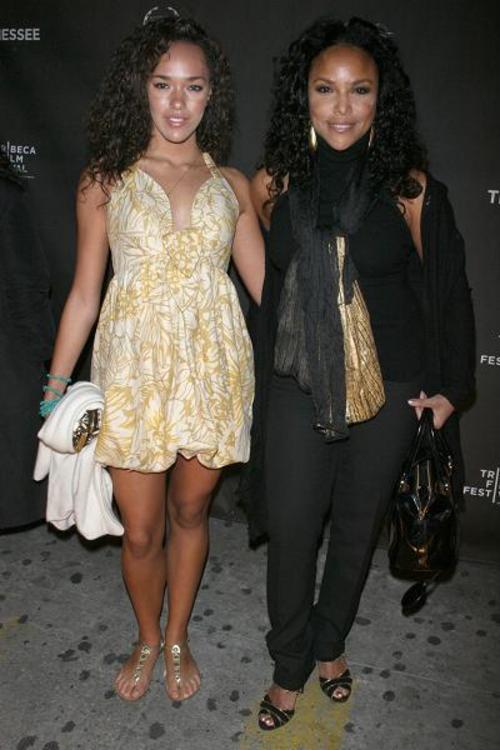
Lynn Whitfield -actress- and her daughter Grace Gibson


I was surfing the web in order to find a good text for an English written test, when I found this site. I liked it so much that I decided to use it in the test I did for my students.

Lynn Whitfield - Actress

My daughter Grace and I watched the premier of CNN’s groundbreaking "Black in America." I thought we would have lively discussions around many of the themes concerning black women in this country. However, when she saw the segments on interracial marriage and the children of those relationships, I saw an activist being born. She went immediately to the computer with dignity, passion and everything but a fist in the air and wrote the statement you are about to read:

Mixed in America
Grace Gibson (16-year-old daughter of Lynn Whitfield)


“Although I found this segment of “Black in America” to be highly informative for the general public, I was disappointed that the interviews in the section on what it is like to be biracial in America seemed to focus only on the more negative aspects. With the eyes of the world now on Barack Obama, I had hoped for a more balanced discussion on what a positive symbol a mixed race person can project.
Obama embodies change and hope for so many in this country of all generations, genders, races and cultures. His message of bringing us all together as Americans is enhanced by his mixed heritage. The biracial person personifies the breaking down of racial barriers that so many fought and died for in the civil rights movement. It is what Dr. Martin Luther King stood for and what his legacy of equality imparts to us today. So one should feel nothing, but pride to be mixed in America.
If parents of biracial children are too concerned about what race their children identify and associate with, the only outcome will be confusion. They should rear their children to have enough self-esteem and self-confidence to be their own persons - encouraging them to be strong children who can grow up to be strong biracial adults. There should be no need for them to say “I am black” or “I am white” because they are neither, yet they are both. Trying to force a choice is often done just to accommodate the people around them. Why should it be so difficult to understand that a person can be and take pride in two races, ethnically and culturally?
I am proud to be a child born to two loving, talented, creative people – a mother and father who happened to be of African-American and English descent, respectively. I do not feel confused at all nor do I have an identity crisis. I do not feel lost in society nor rejected by any race because I am all races in one.
I am the melting pot, and in our global society, soon all the children of the world will be a mixture of races as well. So why should we try to pick and choose what we want and don’t want our children to be? Why can’t we just accept our common humanity and try to refocus our energies on more pressing matters such as Hurricane Dolly in Texas, infected children in flooded Burmese streets, earthquake victims in China, AIDS patients in Sub-Saharan Africa or those here in Washington, D.C.? As the world confronts these and other serious challenges to survival, why add more complications by trying to reduce a living symbol of racial harmony to a checked-box identity?”

Source: http://ac360.blogs.cnn.com/2008/08/09/i-am-neither-black-nor-white-im-both/ (adapted and shortened)