Macmillan Dictionary - Word of the Day

Sunday, March 28, 2010

Back to Portugal ...


Hello!

We're back to Portugal. The days we spent in London were awesome! We did so many things in such a short time. We only rested when we were eating or sleeping.

My students could see with their own eyes how multicultural London was. Moreover, they seized the opportunity to talk to Londoners and to people from different nationalities and ethnic groups.

Besides visiting many famous sites, we had the opportunity to see the musical: "We will rock you". My students just loved it and so did I.

See more at: http://www.wewillrockyou.co.uk/

Monday, March 22, 2010

London is waiting ....


I have already corrected all the tests and concluded my students' evaluations.

Now I am travelling to London with a group of students for four days.

Bye! I hope the weather gets better!

Tuesday, March 16, 2010

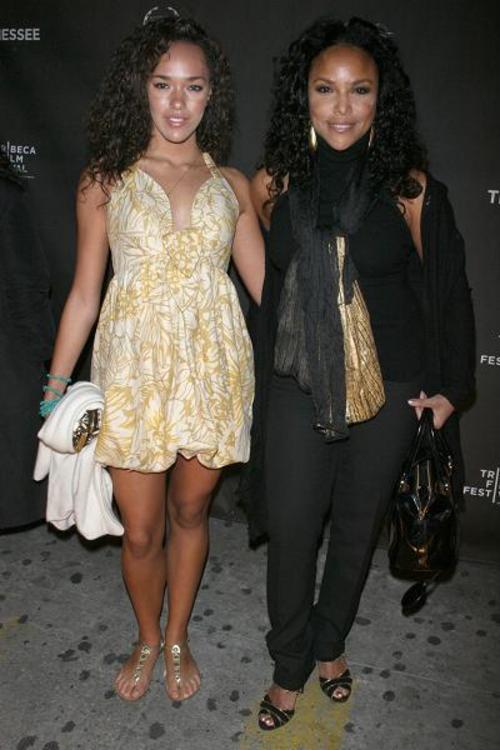
Lynn Whitfield -actress- and her daughter Grace Gibson


I was surfing the web in order to find a good text for an English written test, when I found this site. I liked it so much that I decided to use it in the test I did for my students.

Lynn Whitfield - Actress

My daughter Grace and I watched the premier of CNN’s groundbreaking "Black in America." I thought we would have lively discussions around many of the themes concerning black women in this country. However, when she saw the segments on interracial marriage and the children of those relationships, I saw an activist being born. She went immediately to the computer with dignity, passion and everything but a fist in the air and wrote the statement you are about to read:

Mixed in America
Grace Gibson (16-year-old daughter of Lynn Whitfield)


“Although I found this segment of “Black in America” to be highly informative for the general public, I was disappointed that the interviews in the section on what it is like to be biracial in America seemed to focus only on the more negative aspects. With the eyes of the world now on Barack Obama, I had hoped for a more balanced discussion on what a positive symbol a mixed race person can project.
Obama embodies change and hope for so many in this country of all generations, genders, races and cultures. His message of bringing us all together as Americans is enhanced by his mixed heritage. The biracial person personifies the breaking down of racial barriers that so many fought and died for in the civil rights movement. It is what Dr. Martin Luther King stood for and what his legacy of equality imparts to us today. So one should feel nothing, but pride to be mixed in America.
If parents of biracial children are too concerned about what race their children identify and associate with, the only outcome will be confusion. They should rear their children to have enough self-esteem and self-confidence to be their own persons - encouraging them to be strong children who can grow up to be strong biracial adults. There should be no need for them to say “I am black” or “I am white” because they are neither, yet they are both. Trying to force a choice is often done just to accommodate the people around them. Why should it be so difficult to understand that a person can be and take pride in two races, ethnically and culturally?
I am proud to be a child born to two loving, talented, creative people – a mother and father who happened to be of African-American and English descent, respectively. I do not feel confused at all nor do I have an identity crisis. I do not feel lost in society nor rejected by any race because I am all races in one.
I am the melting pot, and in our global society, soon all the children of the world will be a mixture of races as well. So why should we try to pick and choose what we want and don’t want our children to be? Why can’t we just accept our common humanity and try to refocus our energies on more pressing matters such as Hurricane Dolly in Texas, infected children in flooded Burmese streets, earthquake victims in China, AIDS patients in Sub-Saharan Africa or those here in Washington, D.C.? As the world confronts these and other serious challenges to survival, why add more complications by trying to reduce a living symbol of racial harmony to a checked-box identity?”

Source: http://ac360.blogs.cnn.com/2008/08/09/i-am-neither-black-nor-white-im-both/ (adapted and shortened)

Wednesday, March 10, 2010

Where Is The Love? by Black Eyed Peas

It's time to stop discrimination!


A great song. Enjoy the music and pay attention to the message shown in the lyrics.

Sunday, March 7, 2010

In The Name of Love- A tribute to Martin Luther King


Songfacts:

This is a tribute to Martin Luther King, Jr. An exhibit dedicated to the civil rights leader was on display at the Chicago Peace Museum in 1983 when the band visited the US.
Bono is speaking about those throughout history who have died because they preached of the equality of all men and practiced non-violence as the only way to achieve their goal of having this equality universally recognized.
MLK is the primary example of non-violent resistance as the only way to bring about changes in civil rights. But there are allusions to others; Christ for example.
The song is about singular "people" (including Christ as man) that lived their life with pride. Not in a boastful way, but with the pride a person has when their thoughts and actions are motivated by their understanding and full awareness of the dignity and sanctity of ALL human life.
This began as a song about US president Ronald Reagan. Bono had lyrics written condemning Reagan for an arrogant pride that led to nuclear escalation.
King was killed on a Memphis motel balcony on April 4, 1968. Bono sings "early morning, April 4," but King was actually killed in the evening. Bono has acknowledged the mistake and sometimes sings it as "early evening, April 4."

Read the whole article at: http://www.songfacts.com/detail.php?id=899

Tuesday, February 23, 2010

Multiculturalism in Australia


"Australia is a multicultural society. However, there are mixed feelings among the community about being multicultural. These conflicting viewpoints, stemming from things like the amount of education a person has, their upbringing, media exposure of certain race issues and the political nature of society, develop different attitudes towards multiculturalism. Some believe multiculturalism is good for the society as it brings cultural diversity to the society, can foster a tolerant society, and improve relations with other countries. However, others think multiculturalism is bad, perhaps under the belief that migrants take jobs, that they bring racial tension to Australia, and that they create and settle in ghettos.A person's upbringing plays a major role in their views of the world, and indeed, what they believe about multicultural societies. If a person has grown up in a diverse suburb, with many different races, they would be more likely to be more tolerant of a multicultural society than a person who grew up in a one race suburb, or community. Parent's attitudes are also very important in shaping a person's view of the world ..."

Source: http://www.megaessays.com/viewpaper/86257.html

Multicultural Canada


" The future of multiculturalism is unclear. History has shown that the rise and fall of economic prosperity and the need for a larger labour force affect our society's openness toward new immigrants to our shores. Some fear that multicultural programs have encouraged immigrants, particularly recent ones, to stand apart from the majority of Canadians. Whether or not this is true, those who oppose multiculturalism advocate reducing the number of immigrants allowed into Canada. These critics would admit only those most able to assimilate quickly into mainstream Canadian society.

Who are the new Canadians?

The greater the diversity of the racial and cultural mix, the greater the need for tolerance and openness in accepting one another as fellow Canadians. With globalization and the ever-increasing movement of people from one country to another, the challenge of appreciating and accommodating cultural differences has become a universal experience. A multicultural policy that is sensitive to the needs of both long-time residents and the newly arrived will probably meet with the greatest success. Canada's future depends on the commitments of all its citizens to a unified Canadian identity, while still taking pride in the uniqueness of their individual heritage."

Read more at: http://www.mta.ca/about_canada/multi/#ethnic

Multicultural London


Woodlands Junior School is in the south-east corner of England
More than 270 nationalities make up the fabric of the city. Many have family roots in Africa and India, formerly governed by the British empire.

Although predominantly white and Anglo-Saxon, more than a quarter of London's population is from an alternative ethnic background, making up half of the Britain's total ethnic minorities. This gives London the largest non-white population of any European city and is an important part of its cosmopolitan feel.

Over 250 languages are spoken in the city, making the capital the most linguistically diverse city in the world.

In the 2001 census, people living in London classed their ethnic group as the following:

76% as white (classified as British White, Irish or "Other White"),
10% as Indian, Bangladeshi or Pakistani,
5% as black African,
5% as black Caribbean,
3% as mixed race and
1% as Chinese.

Source: http://www.woodlands-junior.kent.sch.uk/customs/questions/london/multicultural.htm